Dreaming of building your career amidst the stunning landscapes and thriving cities of Canada? You’re not alone. Canada’s robust economy, high quality of life, and welcoming approach to immigration make it a top destination for skilled professionals worldwide. The gateway to this opportunity for millions is the Canada Work Permit Visa.
Application process


But navigating the intricacies of Canadian immigration can feel overwhelming. Is it a simple application, or are there multiple paths? What are the eligibility requirements, and how long does it take?
This definitive guide from Immigration Allnet Result is designed to be your roadmap. We will demystify the Canada Work Permit process, explore the primary pathways, and provide actionable steps to strengthen your application.
Canada Work Permit Visa
First, it’s crucial to understand that a “work permit” is a broad term. It is not a single visa but a general authorization that allows a foreign national to work legally in Canada for a specific period, for a specific employer, and in a specific location (with some exceptions).
Most work permits fall into two main categories:
Employer-Specific Work Permits
Open Work Permits
DV Lottery Free Application Link


1. Employer-Specific Work Permits: The Tied Pathway
This is the most common type of work permit. As the name suggests, it ties you to a single Canadian employer. The permit will specify:
The name of your employer.
How long you can work.
The location where you will work.
The Critical First Step: The LMIA (In Most Cases)
For most employer-specific work permits, your prospective employer in Canada must complete a crucial first step: obtaining a Labour Market Impact Assessment (LMIA).

What is an LMIA?
An LMIA is a document from Employment and Social Development Canada (ESDC) that gives the employer permission to hire a foreign worker. The employer must prove to the government that:
No Canadian citizen or permanent resident is available to do the job.
Hiring a foreign worker will not negatively affect the Canadian labour market.
The wages and working conditions offered are consistent with Canadian standards.
This process is employer-driven, not applicant-driven. Your role begins once the employer has a positive LMIA.
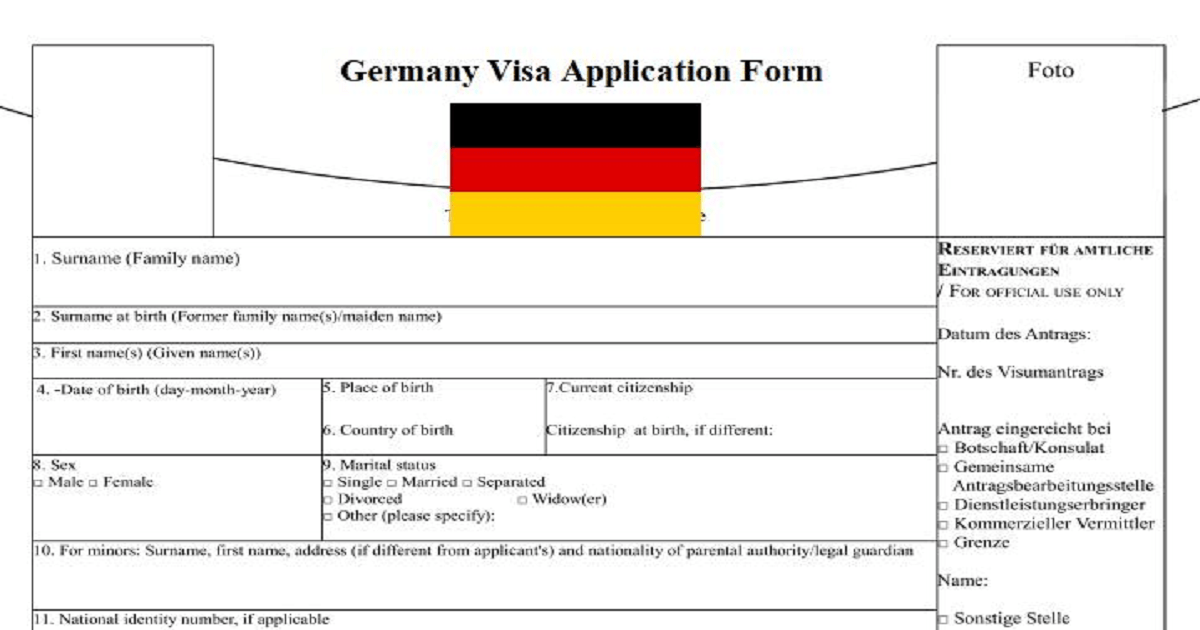
German Free Work Visa Apply Now
2. Open Work Permits: The Flexible Alternative
An open work permit offers significantly more freedom. It allows you to work for almost any employer in Canada, with a few exceptions (e.g., employers deemed ineligible or involved in adult services). You are not tied to a single job.

Who is eligible for an Open Work Permit?
This is a golden ticket, and eligibility is granted under specific circumstances, such as:
Spouses/Common-Law Partners of skilled foreign workers or international students in Canada.
Recent Graduates from a designated Canadian learning institution, applying for a Post-Graduation Work Permit (PGWP).
Participants in International Experience Canada (IEC) programs for youth.
Refugee Claimants or protected persons.
Spouses/Partners of applicants under certain permanent residence programs.
An open work permit does not require an LMIA.
Key Pathways to Your Canada Work Permit
Let’s dive deeper into the most popular and accessible pathways for skilled professionals.
Pathway 1: The Temporary Foreign Worker Program (TFWP)
This program is designed to fill immediate labour shortages. It is the primary route for employer-specific work permits that require an LMIA. The process flow is:
Employer Obtains a Positive LMIA: The Canadian employer applies for and receives a positive LMIA from ESDC.
You Receive a Job Offer: The employer formally offers you the job, providing a copy of the positive LMIA and a detailed employment contract.
You Apply for the Work Permit: You submit your work permit application to Immigration, Refugees and Citizenship Canada (IRCC), including the LMIA and job offer.
Pathway 2: The International Mobility Program (IMP)
The IMP is for situations where Canada’s broader economic, social, or cultural interests are served by allowing a foreign national to work. Most work permits under the IMP are LMIA-exempt. This includes:
CUSMA (formerly NAFTA) Professionals: For citizens of the USA and Mexico in specific professional occupations.
Intra-Company Transferees: For employees transferring to a Canadian branch, subsidiary, or affiliate of their current company.
Participants in International Experience Canada (IEC): A popular program for young adults (aged 18-35) from over 30 partner countries to work and travel in Canada.
Significant Benefit to Canada: For workers who can demonstrate their work will provide a significant social, cultural, or economic benefit to Canada (e.g., entrepreneurs, self-employed engineers, etc.).
Pathway 3: The Post-Graduation Work Permit (PGWP)
This is one of the most valuable pathways for international students who have graduated from a Canadian college or university. The PGWP is an open work permit that allows you to gain crucial Canadian work experience.
Eligibility: You must have studied full-time in a program at least 8 months long at a Designated Learning Institution (DLI).
Length of Permit: The permit’s validity can be anywhere from 8 months to 3 years, depending on the length of your study program.
The Express Entry Link: Canadian work experience gained on a PGWP is a key factor in qualifying for permanent residence through programs like the Canadian Experience Class (CEC).
Step-by-Step: The Work Permit Application Process
While the exact documents vary, the general application process is consistent.
Step 1: Secure a Job Offer (and LMIA if required)
Your journey begins in the Canadian job market. Use platforms like Job Bank, LinkedIn, and Indeed to find employers willing to sponsor foreign talent.
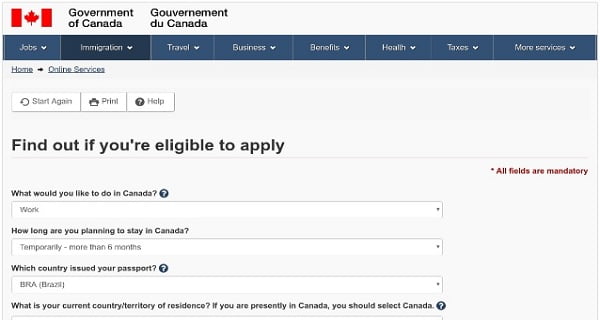
Application From Download Here
Step 2: Determine Your Application Method
You can apply:
Online: The fastest and most common method through the IRCC website.
Paper-Based: A slower, less common option.
At the Port of Entry (POE): In some specific cases (e.g., LMIA-exempt U.S. citizens), you can apply directly when you enter Canada.
Step 3: Gather Your Documents
This is the most critical step. A complete application avoids delays. Essential documents include:
Proof of Identity: Valid passport and recent photographs.
Job Offer and LMIA Copy: (If applicable).
Proof of Qualifications: Educational diplomas/degrees, transcripts, and proof of work experience.
Proof You Will Leave Canada: Ties to your home country (property, family, job offer to return to, etc.).
IMM 5802 Offer of Employment: (For LMIA-exempt jobs, the employer submits this form).
Police Clearance Certificate: To prove you have no criminal record.
Medical Exam: Required if you plan to work in specific sectors like healthcare or with children.
Step 4: Submit Your Application and Pay Fees
Submit all documents through the IRCC portal and pay the processing fees ($155 CAD for the work permit and $100 CAD for the open work permit holder fee, if applicable).
Step 5: Provide Biometrics
After applying, you will receive a Biometrics Instruction Letter. You must then visit a Visa Application Centre (VAC) in person to provide your fingerprints and photograph.
Step 6: Wait for Processing and Decision
Processing times vary widely based on your country of residence, the type of work permit, and application volume. Always check the IRCC website for current processing times.
Beyond the Permit: Transitioning to Permanent Residence
For many, a work permit is the first step toward becoming a Canadian permanent resident. The Canadian government highly values applicants who already have Canadian work experience and are integrated into society.
Key pathways from a work permit to PR include:
Canadian Experience Class (CEC): If you have at least one year of skilled work experience in Canada, you can apply through the Express Entry system.
Provincial Nominee Programs (PNPs): Almost every Canadian province has streams that nominate foreign workers (and their families) for permanent residence based on their ability to contribute to the province’s economy.
Atlantic Immigration Program (AIP): A specific program for skilled workers and international graduates who want to work and live in Canada’s Atlantic provinces (New Brunswick, Newfoundland and Labrador, Nova Scotia, and Prince Edward Island).
Apply Now
Common Pitfalls and How to Avoid Them
Incomplete Application: The #1 reason for refusal. Double-check the document checklist and ensure every field is filled correctly.
Misrepresentation: Providing false information or documents can lead to a 5-year ban from Canada. Be 100% truthful.
Weak Ties to Home Country: You must convince the visa officer that you will leave Canada at the end of your authorized stay. Demonstrate strong familial, financial, or professional ties to your home country.
Insufficient Funds: Show that you have enough money to support yourself and your family members upon arrival in Canada.
Relying on Unverified Advice: The rules change frequently. Always refer to the official IRCC website or consult with a Regulated Canadian Immigration Consultant (RCIC).
Conclusion: Your Canadian Dream is Within Reach
The path to obtaining a Canada Work Permit Visa is clearly marked, though it requires diligence, patience, and careful attention to detail. Understanding the difference between employer-specific and open work permits, knowing whether you need an LMIA, and choosing the right pathway for your profile are the foundational steps to success.
Remember, this permit is more than just a visa; it’s an opportunity to build a new life in one of the world’s most prosperous and diverse countries. It’s your first official step onto Canadian soil as a contributor to its vibrant economy and society.
Ready to take the next step?
At Immigration Allnet Result, we are dedicated to providing you with the most accurate and up-to-date information to navigate your immigration journey with confidence. Explore our website for more detailed guides on Express Entry, PNPs, and other pathways to make Canada your new home.