Getting a work permit in a new country can often feel like navigating a complex maze of bureaucracy. However, for those looking toward the Balkans, the Serbia Work Permit Visa process has become significantly more streamlined in 2024 and 2025. With the introduction of the “Single Permit” system, Serbia has modernized its approach to attracting international talent, from IT specialists to construction professionals.
This comprehensive guide covers everything you need to know about obtaining a Serbian work permit, the legal requirements, the application process, and why Serbia is becoming a top destination for global workers.

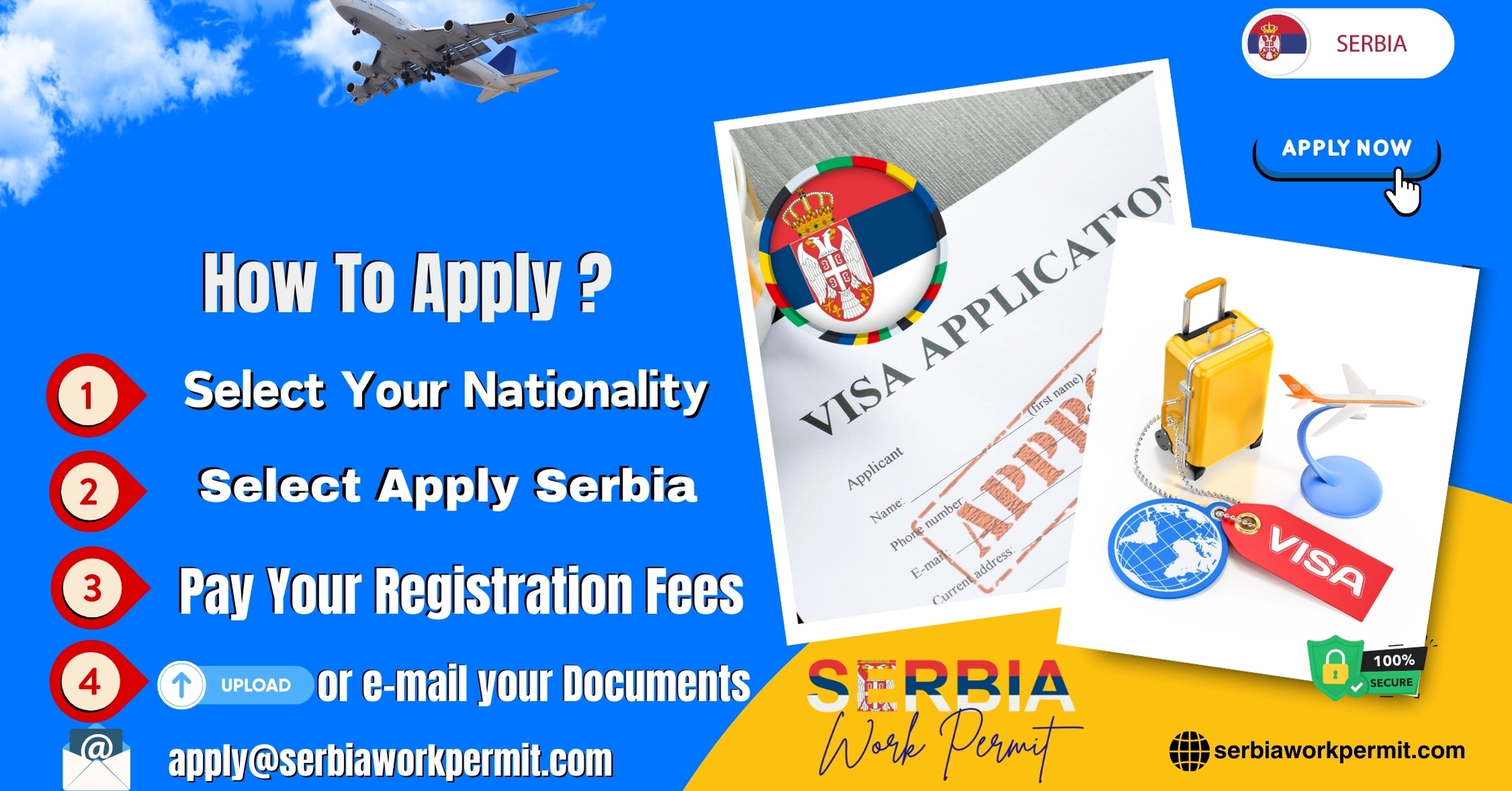
Online Application Link
Introduction to Working in Serbia
Serbia is rapidly transforming into a regional hub for technology, manufacturing, and logistics. Its strategic location at the crossroads of Central and Southeast Europe makes it an attractive destination for foreign investment and, consequently, foreign labor.
Historically, foreigners had to apply for a residence permit and a work permit separately. As of February 1, 2024, Serbia introduced a Single Permit (Jedinstvena dozvola), which combines both residence and work authorization into one digital application.1 This reform has slashed processing times and reduced the paperwork burden on both employers and employees.
Types of Work Permits in Serbia
Before you apply, it is essential to understand which category of work permit fits your professional situation. The Serbian National Employment Service (NES) categorizes permits based on the nature of the engagement:
Work Permit for Employment: The most common type, issued when a Serbian employer hires a foreign national under a standard employment contract.
Self-Employment Permit: For entrepreneurs looking to start their own business or register as a sole proprietor in Serbia.
Intra-Company Transfer (ICT): For employees of multinational corporations being transferred to a Serbian branch.
Independent Professional Permit: For freelancers or specialized consultants working on specific projects for a Serbian client.
Training and Development Permit: For those coming for professional internships, specialized training, or vocational practice.
The “Single Permit”: A Game Changer
The Single Permit is the modern standard for working in Serbia.5 It allows you to live and work in the country for up to three years (renewable).
Who can apply?
Any non-Serbian citizen who has secured a job offer or intends to start a business.7
Visa-Free Nationals: If you are from a country that doesn’t need a visa to enter Serbia (like the USA, UK, or EU members), you can apply for the Single Permit from within Serbia or even from abroad via the online portal.
Visa-Required Nationals: If your country requires a visa to enter Serbia (like India, Pakistan, or many African nations), you must first obtain a Visa D (Long-Stay Visa) at a Serbian embassy before entering the country to finalize your Single Permit.
4. Step-by-Step Application Process
The application process is now almost entirely electronic, handled through the “Welcome to Serbia” (Living in Serbia) portal.1
Step 1: Secure a Job Offer
You cannot apply for a work permit without a sponsor.11 You must have a signed employment contract or a letter of intent from a Serbian-registered company.

Step 2: The Labor Market Test
Before hiring a foreigner, the Serbian employer must prove that there is no qualified Serbian citizen available to fill the role.13 This is done through the National Employment Service (NES).14 The test usually takes 10–15 days. If the NES finds no suitable local candidates, the employer receives the green light to hire an international worker.
Step 3: Online Application (Single Permit)
The employer or the foreigner (with legal assistance) submits the application via the Single Portal for Foreigners.16 You will need to upload digital copies of all required documents.
Step 4: Biometrics and Approval
Once the online application is processed and approved (usually within 15 days), the applicant must visit the local Ministry of Interior (MUP) office in Serbia to provide biometric data (fingerprints and photo).
Step 5: Issuance of the ID Card
Shortly after biometrics, you will be issued a biometric card that serves as both your ID and your proof of legal work and residence.
5. Required Documents Checklist
To ensure a smooth application for the Serbia Work Permit Visa, keep the following documents ready:
Valid Passport: Must be valid for at least three months beyond the intended stay.
Employment Contract: Signed by both the employer and the employee.
Proof of Qualification: Diplomas, degrees, or certificates (must be translated into Serbian by a certified court translator).
Proof of Accommodation: A registered rental agreement or a “White Card” (Beli Karton) from a hotel/hostel.
Health Insurance: Proof of valid medical insurance covering the duration of the stay.
Criminal Record Clearance: Depending on the specific case, a police clearance certificate from your home country may be required.
Proof of Paid Fees: Digital receipts for the administrative taxes.
Processing Times and Costs
Efficiency is one of the main goals of the new Serbian system.
Processing Time: Under the new Single Permit system, the decision is typically made within 15 days of a complete application. If you require a Visa D first, add another 2–4 weeks for embassy processing.21
Government Fees:
Visa D Application Fee: Approx. €50.
Single Permit Fee: Approx. 22,700 RSD (roughly €195).
Administrative Submission Fee: Approx. 420 RSD.
Note: Fees are subject to change based on the current exchange rate and annual government adjustments.
7. The Visa D: The Pathway for Many
For many workers from Asia, Africa, and parts of the Middle East, the Visa D (Long-Stay Visa) is the first hurdle.23 It is valid for 90 to 180 days.
Under the new 2024 regulations, if you obtain a Visa D for the purpose of employment, you can start working the moment you enter Serbia.24 You do not have to wait for the Single Permit card to be printed, provided your Visa D was issued specifically for work. This is a massive advantage for companies that need staff on-site immediately.
8. Why Work in Serbia?
Beyond the paperwork, Serbia offers a unique environment for foreign professionals:
Low Cost of Living: Compared to Western Europe, rent, food, and transport are significantly more affordable.
Booming IT Sector: Cities like Belgrade and Novi Sad are thriving tech hubs with a high demand for developers and engineers.
Strategic Location: You are a short flight or drive away from major European capitals like Vienna, Budapest, and Athens.
Social Life: Serbian culture is known for its hospitality, vibrant nightlife, and rich culinary scene.
9. Common Reasons for Visa Rejection
While the process is easier than ever, rejections still happen. Common pitfalls include:
Incomplete Documentation: Missing translations or expired insurance policies.25
Failed Labor Market Test: If the NES finds many qualified Serbians for the specific role, the permit may be denied.
Inaccurate Information: Discrepancies between the employment contract and the online application form.
Security Concerns: If the applicant has a history of overstaying in the Schengen area or a criminal record.
10. Frequently Asked Questions (FAQ)
Can I change employers in Serbia?
Yes. Under the Single Permit system, you can apply to change your employer.26 However, the new employer must conduct a new labor market test, and you must update your permit through the portal.
Can my family join me?
Absolutely. Foreign workers can apply for Family Reunification permits for their spouse and children.27 This process is usually initiated after the primary worker has received their residence permit.
Is there a minimum salary requirement?
Yes. Your salary must meet the legal minimum wage in Serbia. For highly skilled positions, the government may look for salaries that align with industry standards to ensure the hire is legitimate.
How long can I stay on a work permit?
Single permits are usually issued for the duration of the employment contract, up to a maximum of three years. They are renewable indefinitely as long as you remain employed.
Final Thoughts
The Serbia Work Permit Visa (Single Permit) has made the country one of the most accessible places in Europe for foreign workers in 2025. By moving the entire process online and combining residence and work rights, the Serbian government has created a “fast track” for international talent.
Whether you are a digital nomad, a construction specialist, or a corporate executive, understanding these rules is the first step toward your new life in the Balkans.